笑いと悲哀をこらえた話 A Story of Suppressed Laughter and Sorrow (JPN/ENG)

Episodes

JPN

日本の総理大臣に同行するビジネス関係者の訪問団に慌ただしく紛れて、UAE(アラブ首長国連邦)のアブダビに行ったことが2回ある。1度目は2013年、2度目は2018年のことで、どちらも首相は安倍晋三氏だった。

2018年4月末から5月初旬にかけて、アブダビで開催された「日本―UAE ビジネスフォーラム」は、2012年に日本が無事にUAEとの石油利権交渉を成功裏に終え、その勢いに載せてビジネスの側面から、軌道に乗りかけた提案や新しいアイディアを展開することがテーマだった。すなわち日本の自動車、建築、金融などに加えて、医療、教育、農産物や食材など、日本の生活や暮らし全般から商品を中東に送り出してきた、経済界の代表者たちが集っていた。経団連の幹部や企業の社長、教育機関の経営者、農業のベンチャーなど多士済々だった。

総理大臣が営業の先頭に立って、中東で日本のマスカットやトマトの売り込みや、中東では先行しているヨーロッパとの医療分野に、日本の医療機器を参入させるなど試行錯誤した5年間だった。それらを踏まえて、このアブダビで開催された ビジネスフォーラムも、今後へ向けてすべてのテーマ別会議が終わり、最後の記念写真撮影への準備が進んでいた。壇上では、よく国際会議で見かける光景、中央に日本の首相と経産大臣や大使が並び、UAE側も同等の大臣クラスが並ぼうとしていた。

私はと言えば、法人の代表としてなんとか役割を終え、緊張していた日程から解放されて、会場の前から3列目ぐらいの席から、壇上をながめていた。隣に座られたいかにも上品な方が私より先に立ち上がって「ご挨拶させていただきます。どこでお世話になるかわかりませんので」と言われて名刺を差し出された。私はお隣の方にご挨拶をするかどうか一瞬考えたのだが、閉会もまじかで会釈をしただけで座っていた。その名刺には「株式会社 大成建設 取締役社長」の名前が書かれていた。

しばらくすると、「山野さん、すみませんが日本側に女性が一人も壇上にいないので、行っていただけますか?」と省庁の若い担当者、箕輪さん(仮名)が慌てた様子で駆けつけてきた。勿論、「なぜ私が?」と聞かれるので、理由まで一緒にして依頼してきた。「UAEは女性が2人もいるのですよ」、と切実な声で言う。国内省庁の人は、おそらく中東では女性は誰もステージまで登らないと思い込んでいたのか、急に上司に言われたのかわからないが、ここでそもそも論を持ち出して、ぐずぐずしても仕方ない。洋服は辛うじてスーツだから行こうか。「私が場所までご案内しますので」と言って一緒に来てくれたのは当然だが、箕輪さんも私もそれからが大変だった。彼は、最前列から通してもらって最後列までたどり着こうとしたのだ。私も経験がないから、そういうものだと思い後から付いて行った。

すでに壇上に並んでいる紳士たち全員は、顔は笑顔ながら、私たちが通過したい隙間は意味があり、左右にとってある間隔は詰められないし、その場所からは絶対動けない。後から急にやってきた私が、そばを通過するだけとは限らず、割り込んで入ってくるかもしれないと警戒するのは当たり前で、後から闖入した私は明らかにルール違反だ。中央の首相により近く、序列か先着順かわからないが、その立ち位置は誰も絶対譲歩する必要はないし、私もそんなことお願いしていない。私は必死ではあったが、そのうちこの力仕事が無性に可笑しくなってきた。「通らせてください!」笑い声とも泣き声ともつかない声で囁きながら、力いっぱい隙間に入り、銅像のように手足も胴体もびくともしない人達をかきわけて、まず最前列から2列目へと突破した。最後列、3列目に入ると、隣になった背の高い人が、どうぞ、どうぞと間隔を調整してくださって、ようやく正面を向いた。その紳士はさきほど、「どこでお世話になるかわからないので」と言われて名刺交換をした大成建設の社長さんだった。さっそくお世話になったのは私でした。

帰国後まもなく、箕輪さんが出来上がった、そのステージ上の集合写真を入手して謝りに来た。認識不足や準備不足などの反省や、写真を私に届けることよりも、本心は、写真を眺めて、このシーンにまつわる厳しさと恥ずかしさを、ただただ体力で乗り越えた自分たちの顛末を、心行くまで分かち合いたかったに違いない。

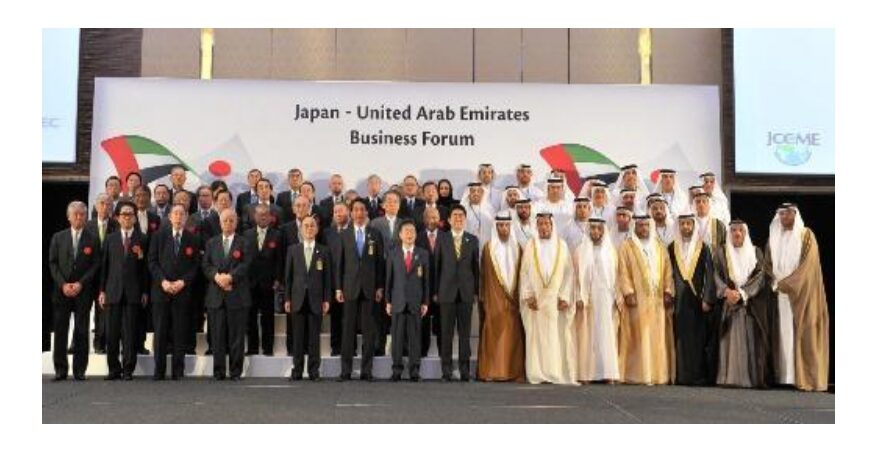
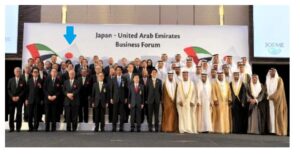
写真自体はさすがに素晴らしいものだった。しかし、壇上でようやく最後列に到達できた苦労の甲斐もなく、私の姿は、立ち位置こそ日の丸の国旗の前で申し分ないが、前髪と額をわずかに見せながらも、姿はすっかり陥没していたのである。箕輪さんは笑いが収まると、「日の丸の前に立っている人は山野さんだと、証明できるのは私だけですね」と言っていた。口に出せない可笑しさと悲哀だった。
写真提供 内閣広報室

ENG

Twice, I found myself swept up in the bustle of a business delegation accompanying Japan’s Prime Minister to Abu Dhabi in the United Arab Emirates. The first time was in 2013, and the second in 2018. On both occasions, the Prime Minister was Mr. Shinzo Abe.

From late April to early May of 2018, the “Japan–UAE Business Forum” was held in Abu Dhabi. It built upon the success of Japan’s 2012 negotiations that had renewed its oil concession rights with the UAE. The theme was to advance proposals and new ideas from a business perspective that were beginning to gain traction. Representatives from Japan’s business community gathered, showcasing products ranging from automobiles, architecture, and finance to medical care, education, agriculture, and food products. Representatives from all walks of Japanese industry gathered, executives from Keidanren, CEOs of major corporations, leaders of educational institutions, and agricultural entrepreneurs.

Since 2012, for five years, Japan had been promoting its products and technologies across the Middle East under the Prime Minister’s direct initiative, marketing muscat grapes and tomatoes, or introducing Japanese medical equipment into sectors long dominated by Europe. With that in mind, the business forum held here in Abu Dhabi had concluded all its thematic sessions for the future, and the last remaining part was the final commemorative photo. As at most international gatherings, the Prime Minister, the Minister of Economy, and the Ambassador were lined up in the center of the stage, with their UAE counterparts, ministers and dignitaries, taking their places beside them.

As for me, I had just completed my own duties as a corporate representative and finally relaxed from the tension of the busy schedule. I sat at the very back and watched the stage quietly. The refined gentleman next to me rose first and said, “Allow me to introduce myself. You never know when we might cross paths.” as he handed me his business card. I briefly considered introducing myself as well, but since the session was about to end, I simply nodded politely and remained seated. The card bore the name “President, Taisei Corporation.”

A short while later, a young official from one of the ministries, Mr. Minowa (pseudonym) rushed over to me in a fluster.

He said, “Ms. Yamano, excuse me, but there are no women on the Japanese side at the podium. Could you please go up there?”

Of course, he knew I would ask, “Why me?”, so he hurried to explain:
“The UAE side has two women,” almost pleading.

Perhaps the Japanese officials had assumed that no women would ever appear on stage in the Middle East, or perhaps his superior had suddenly instructed him to fix the imbalance. Either way, there was no time for debate. Fortunately, I was wearing a suit, so I agreed to go.

“I’ll take you to the spot,” he said.

Naturally, he went with me, but that was when our ordeal began.

Instead of taking a side aisle, he decided to make our way from the front row all the way to the back, through the line of already assembled dignitaries. I followed, assuming this was standard protocol.

All the gentlemen already on stage were standing rigidly in place, smiling politely yet firmly holding their ground. The narrow gaps between them were intentional; they could not move closer together, nor could they step aside. For all they knew, this woman suddenly appearing might not just be passing through but trying to cut in and they were right to be wary. I was clearly an intruder breaking the rules.

The positions, whether determined by seniority or arrival, were fixed and non-negotiable. I had no intention of asking anyone to move, yet I had to get through. The effort was desperate, but at some point, it became absurdly funny. Whispering something between a laugh and a sob, “Please let me through!” I squeezed with all my strength between what felt like statues. Bit by bit, I forced my way from the first row to the second. Finally, when I reached the third and last row, a tall gentleman next to me kindly adjusted his stance to make room. When I looked up, I realized it was the very same president of Taisei Corporation who had earlier said, “You never know when we might be of help to each other.”
Indeed, it turned out I was the one who needed his help first.

Soon after our return to Japan, Mr. Minowa came to see me, bringing the official group photograph and an apology. His words of reflection about lack of foresight and preparation were sincere, but I sensed that wasn’t the main reason he came. More than anything, he probably wanted to share, with someone who had lived through it, the absurdity and embarrassment we had survived only through sheer physical effort.

The photograph itself was magnificent, as one would expect. And yet, despite all the struggle to reach the back row, my image had nearly disappeared. Though I stood, fittingly enough, right before the Japanese flag, only my forehead and a few strands of hair were visible.

When the laughter finally subsided, Mr. Minowa said, “I’m the only one who can testify that the person standing in front of the flag is you, Ms. Yamano.”

It was an indescribable blend of laughter and quiet sorrow.

Provided by cabinet public affairs office


The End

タイトルとURLをコピーしました